




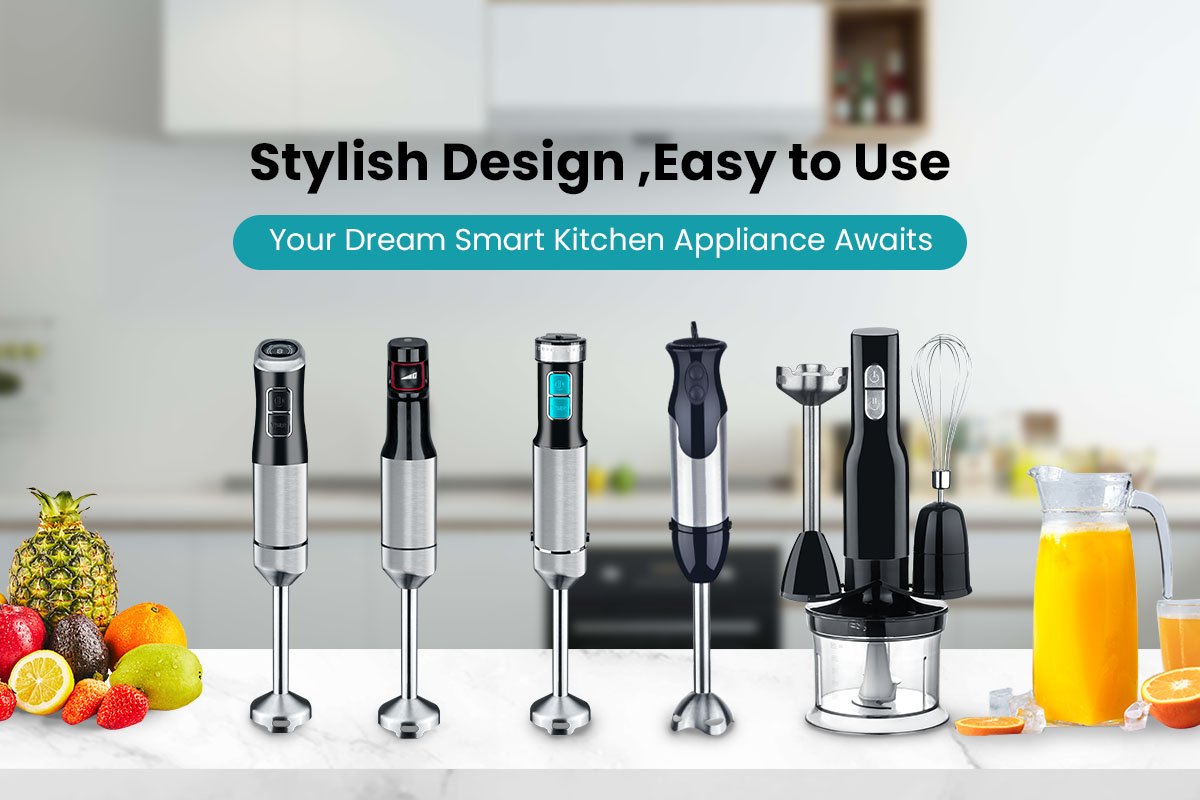
Multifunction Blender Factory vs Trading Supplier: Which Provides Better Supply Stability?
Multifunction blender Factory usually provides stronger supply stability through direct production control, while Trading Supplier offers flexible sourcing support and easier product selection.
What Is the Difference Between Multifunction blender Factory and Trading Supplier?
For kitchen appliance brands and importers, the main difference between Multifunction Blender Factory and Trading Supplier is the supply chain structure, production control, communication process, quality management, and long-term cooperation capability.
A Multifunction Blender Factory directly manages product manufacturing, including production planning, material control, assembly, testing, and packaging.
A Trading Supplier mainly connects buyers with manufacturers. It provides sourcing, coordination, and export services but usually does not directly control the production process.
From a supply stability perspective, the cooperation model affects production transparency, delivery reliability, customization capability, and problem-solving efficiency.
| Comparison | Multifunction Blender Factory | Trading Supplier |
|---|---|---|
| Supply Chain Role | Direct manufacturer | Sourcing intermediary |
| Production Control | Direct control | Depends on factories |
| Communication | Direct technical connection | Multi-party communication |
| Customization Ability | Stronger | Depends on suppliers |
| Supply Stability | More controllable | Varies by supplier network |
Why Do Brands Choose Multifunction Blender Factory Cooperation?
Working directly with a Multifunction Blender Factory provides stronger control over production and supply management.
Main advantages include:
Direct production communication
Better manufacturing visibility
More stable quality control
Stronger customization support
Easier production planning
A factory can directly manage:
Raw material preparation
Production scheduling
Assembly processes
Quality inspection
Packaging procedures
For brands with long-term product strategies, direct factory cooperation helps create a more predictable supply system.
Common applications include:
OEM projects
Private label products
Large-volume orders
Customized blender development
Why Do Some Brands Choose Trading Supplier Solutions?
Trading Suppliers provide convenience by connecting buyers with different manufacturing resources.
Main advantages include:
Access to multiple product options
Reduced sourcing workload
Easier supplier communication
Support for different product categories
Trading suppliers can assist with:
Product selection
Supplier coordination
Order management
Export arrangements
For businesses that need multiple categories or have limited sourcing experience, trading suppliers can provide operational convenience.
Which Provides Better Production Control?
Production control directly affects supply stability.
Multifunction Blender Factory Advantages:
Factories can directly manage:
Production schedules
Manufacturing processes
Material quality
Product testing
Delivery preparation
This allows faster communication when adjustments are required.
Trading Supplier Considerations:
Trading suppliers depend on their manufacturing partners.
Potential challenges include:
Less direct production visibility
Longer communication processes
Limited control over manufacturing changes
The actual stability depends on the supplier network and management capability.
Which Provides Better OEM Customization Support?
Customization requirements often influence the choice of cooperation model.
Multifunction Blender Factory OEM Advantages:
Factories can directly support:
Product structure changes
Function customization
Accessory combinations
Material selection
Packaging development
Technical discussions can happen directly between brand teams and production teams.
Trading Supplier Customization Process:
Customization usually requires communication between:
Brand → Trading Supplier → Factory
For complex product development, additional communication steps may affect efficiency.
How Does Supply Stability Affect Brand Growth?
Stable supply is important for brands managing long-term sales channels.
A reliable supply system helps brands achieve:
Consistent product availability
Better inventory planning
Predictable delivery schedules
Faster problem resolution
Direct factory cooperation can provide advantages through closer production coordination.
Trading supplier cooperation can provide flexibility when brands need products from different sources.
Which Model Provides Better Quality Management?
Quality management differs between factories and trading suppliers.
Multifunction Blender Factory Quality Control:
Factories can directly manage:
Incoming material inspection
Production line checks
Function testing
Final inspection
Packaging inspection
This creates clearer responsibility throughout the manufacturing process.
Trading Supplier Quality Management:
Trading suppliers usually coordinate quality requirements with factories.
Quality results depend on:
Factory selection
Supplier management
Inspection procedures
Which Cooperation Model Is Better for Large Orders?
Large-volume orders require stronger production coordination.
Multifunction Blender Factory Advantages:
Direct capacity planning
Stable production scheduling
Better production communication
Easier order adjustments
Trading Supplier Advantages:
Flexible product sourcing
Multiple supplier options
Easier category expansion
For brands requiring consistent products and long-term supply, factory cooperation usually provides stronger control.
Which Model Fits Different Buyer Types?
Different buyers may require different cooperation methods.
Multifunction Blender Factory Fits:
Established brands
Long-term importers
Companies requiring OEM products
Buyers with specific technical requirements
Trading Supplier Fits:
New buyers
Companies needing multiple product categories
Businesses requiring sourcing support
Buyers with smaller or mixed product needs
The suitable choice depends on business size, product requirements, and supply strategy.
How Should Brands Choose Between Factory and Trading Supplier?
Brands can evaluate:
Choose Multifunction Blender Factory When:
Supply stability is important
OEM customization is required
Long-term cooperation is planned
Direct production communication is preferred
Choose Trading Supplier When:
Multiple product choices are needed
Sourcing resources are limited
Different suppliers need coordination
Faster product access is the priority
The right cooperation model depends on product complexity, order requirements, and future business plans.
How Can a Multifunction Blender Manufacturer Support Stable Supply?
A professional Multifunction Blender manufacturer can support brands through:
Production planning
OEM development
Quality control systems
Capacity management
Product testing
Export packaging
Long-term supply coordination
Manufacturers with complete production capabilities can help brands establish more reliable supply chains.
Conclusion: Multifunction Blender Factory or Trading Supplier, Which Provides Better Supply Stability?
Multifunction Blender Factory generally provides stronger supply stability through direct production control, transparent manufacturing processes, and better customization support. Trading Supplier provides flexibility, sourcing convenience, and access to different product resources.
For kitchen appliance brands, the best cooperation model depends on order volume, customization needs, supply requirements, and long-term business strategy.