




Countertop Blender vs Immersion Blender: Which Is More Suitable for Global Markets?
Countertop blender fits global markets requiring higher capacity and stronger blending performance, while Immersion blender provides wider flexibility through compact design and versatile applications.
What Is the Difference Between Countertop Blender and Immersion Blender?
For kitchen appliance brands targeting global markets, the main difference between Countertop Blender and Immersion Blender is the product structure, usage method, consumer habits, application scenarios, and market positioning.
A Countertop Blender uses a motor base and blending jar system. It is designed for stable countertop operation, larger capacity, and high-volume blending tasks.
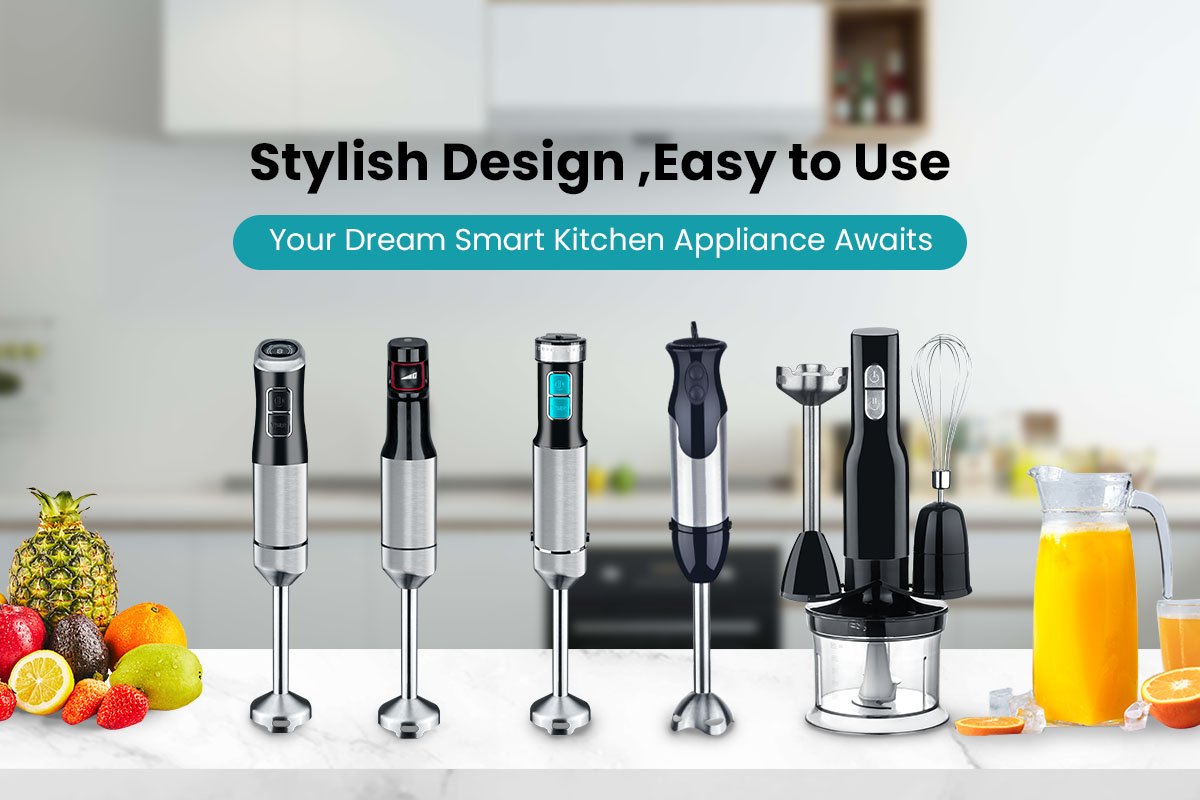
An Immersion Blender is a handheld appliance that allows users to blend directly in different containers. It focuses on flexibility, convenience, and space-saving design.
From an international market perspective, selecting the right blender category depends on regional consumer habits, retail channels, product positioning, and distribution strategy.
| Comparison | Countertop Blender | Immersion Blender |
|---|---|---|
| Product Structure | Motor base + jar | Handheld motor + shaft |
| Main Advantage | Capacity and performance | Flexibility and convenience |
| Space Requirement | Higher | Lower |
| Target Users | Families and heavy users | General households |
| Market Positioning | Performance appliance | Flexible kitchen tool |
Why Do Brands Choose Countertop Blender Products?
Countertop Blender products remain popular in global markets because they provide strong performance and familiar user experience.
Main advantages include:
Larger blending capacity
Stable operation
Strong motor performance
Better countertop presentation
Suitable for multiple recipes
Common applications include:
Smoothie preparation
Juice blending
Frozen beverage production
Food ingredient processing
For brands targeting household appliance markets, Countertop Blender offers a widely recognized product category.
Common sales channels include:
Supermarkets
Appliance retailers
Online marketplaces
Kitchen appliance distributors
Why Do Brands Choose Immersion Blender Products?
Immersion Blender products provide strong market potential through their flexibility and convenience.
Main advantages include:
Compact structure
Easy storage
Direct blending operation
Lower transportation requirements
Multiple usage scenarios
Common applications include:
Soup blending
Sauce preparation
Baby food processing
whisking and mixing
For markets where kitchen space and convenience are important, Immersion Blender provides a practical solution.
Which Product Better Fits Different Global Consumer Habits?
Consumer lifestyle differences influence product demand.
Countertop Blender Fits Consumers Who Need:
Larger food preparation capacity
Family cooking solutions
Frequent blending tasks
Stronger performance
Common markets include:
Large households
Beverage-focused users
Consumers with larger kitchens
Immersion Blender Fits Consumers Who Prefer:
Compact appliances
Flexible usage
Easy storage
Quick preparation
Common markets include:
Urban households
Small kitchens
Convenience-focused consumers
Which Product Provides Better OEM Opportunities?
Both products support OEM development with different customization directions.
Countertop Blender OEM Options:
Common customization includes:
Motor power
Jar capacity
Blade structure
Control panel
Product appearance
Packaging design
The focus is creating powerful countertop appliances.
Immersion Blender OEM Options:
Common customization includes:
Shaft materials
Motor configuration
Speed control
Accessory combinations
Handle design
Product colors
The focus is creating flexible kitchen tools.
How Do Product Structures Affect Global Shipping?
International distribution requires consideration of size, weight, and logistics.
Countertop Blender Shipping Considerations:
Larger packaging size
Higher storage requirements
More protective packaging
Higher transportation volume
Advantages:
Strong retail display value
Higher product visibility
Immersion Blender Shipping Advantages:
Compact packaging
Lower shipping volume
Easier warehouse management
Flexible inventory planning
For global distributors, logistics efficiency can influence product selection.
Which Product Has Better Retail Channel Opportunities?
Different retail channels may prefer different product categories.
Countertop Blender Fits:
Appliance stores
Supermarkets
Premium kitchen retailers
Household appliance distributors
Retail advantages:
Strong shelf presence
Clear performance communication
Suitable for family-oriented products
Immersion Blender Fits:
Online marketplaces
Kitchenware stores
Lifestyle retailers
Compact appliance categories
Retail advantages:
Easy product explanation
Lower inventory pressure
Strong convenience appeal
Which Product Provides Better Market Differentiation?
Product differentiation helps brands compete in global markets.
Countertop Blender Differentiation Opportunities:
Brands can focus on:
High-speed performance
Large capacity
Advanced controls
Premium appearance
Immersion Blender Differentiation Opportunities:
Brands can focus on:
Multi-function accessories
Compact design
User convenience
Flexible applications
The right differentiation strategy depends on target customers and regional preferences.
How Does Product Positioning Affect Pricing Strategy?
Pricing should match customer expectations.
Countertop Blender Pricing Advantages:
Higher perceived performance
Suitable for premium positioning
Stronger value communication
Immersion Blender Pricing Advantages:
Lower entry barrier
Wider consumer accessibility
Suitable for broader markets
Brands should balance product features, production costs, and market purchasing power.
Which Product Is Easier for Global Market Expansion?
Global expansion requires matching products with local demand.
Countertop Blender Expansion Advantages:
Familiar product category
Strong household acceptance
Suitable for established appliance markets
Immersion Blender Expansion Advantages:
Compact design
Easier logistics
Suitable for diverse living environments
Both categories have global opportunities depending on regional consumer needs.
How Should Brands Choose Between Countertop Blender and Immersion Blender?
Brands can evaluate:
Choose Countertop Blender When:
Large capacity is important
Performance is the main selling point
Family users are targeted
Premium appliance markets are planned
Choose Immersion Blender When:
Convenience is the priority
Compact products are preferred
Flexible applications are needed
Wider consumer coverage is desired
The right choice depends on market demand, consumer habits, retail channels, and brand strategy.
How Can a Blender Manufacturer Support Global Market Development?
A professional blender manufacturer can support brands through:
Market-oriented product recommendations
OEM customization
Product testing
Quality control
Packaging solutions
Mass production support
Export experience
Manufacturers with experience in different blender categories can help brands develop suitable products for global markets.
Conclusion: Countertop Blender or Immersion Blender, Which Is More Suitable for Global Markets?
Countertop Blender provides stronger opportunities in markets focused on capacity, performance, and household applications. Immersion Blender provides advantages in flexibility, convenience, and compact living environments.
For kitchen appliance brands, the suitable product depends on regional consumer behavior, sales channels, product positioning, and long-term market strategy.