




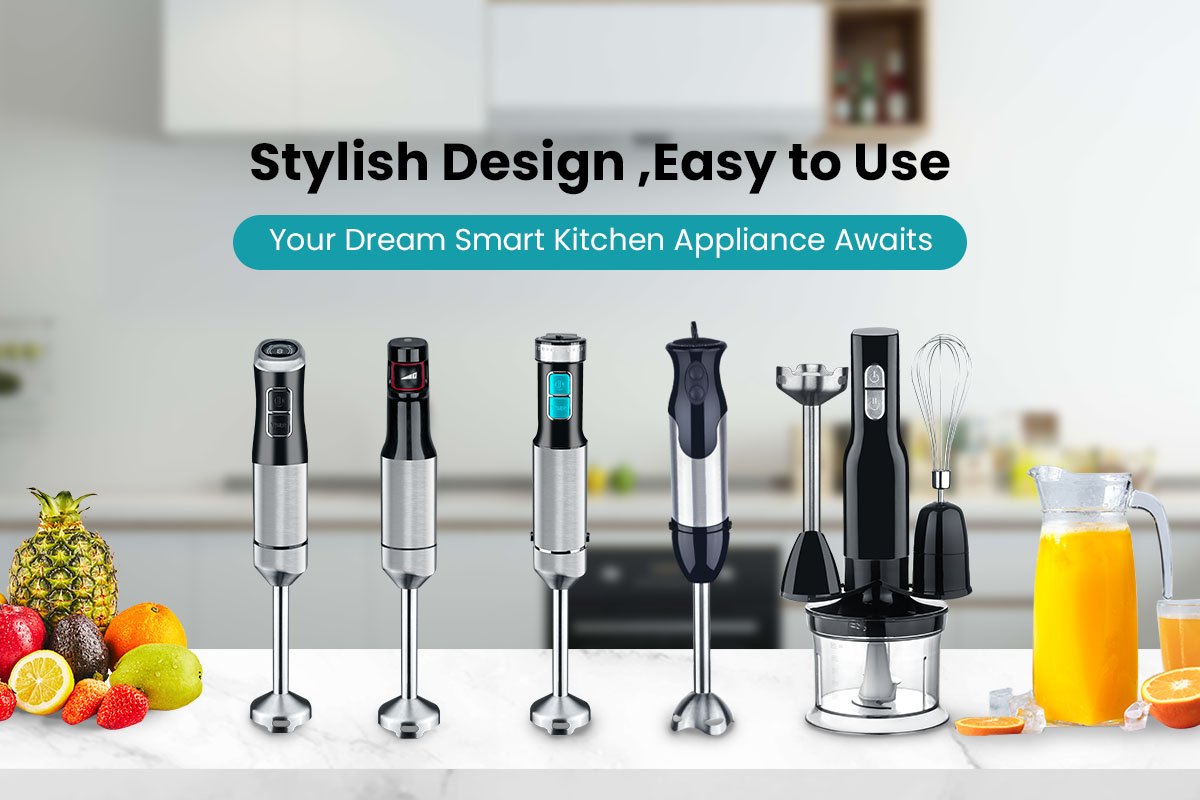
What Makes A Blender Energy Efficient?
Energy Efficiency Comes From Motor Matching
A blender becomes energy efficient when the motor, blade structure, jar design, speed control, and cooling system work together. Higher wattage can provide stronger blending power, but energy efficiency depends on how much useful blending result the appliance delivers during each working cycle.
KANGJIA’s High-Speed blender uses a 500W motor, stainless steel blades, stainless steel housing, and five blending speed levels. This type of structure helps users adjust power output for different ingredients instead of running every recipe at the highest speed.
Key Factors That Improve Blender Energy Efficiency
| Factor | How It Helps Efficiency | Buyer Should Check |
|---|---|---|
| Motor matching | Reduces wasted power under normal loads | Wattage, torque, heat rise |
| Blade design | Cuts ingredients faster with less repeated blending | Blade angle and stainless steel quality |
| Jar circulation | Moves ingredients back to the blade area | Jar shape and capacity |
| Speed control | Matches power to soft or hard ingredients | Speed levels and pulse function |
| Cooling design | Reduces overheating during repeated use | Airflow and working interval |
| Sealing structure | Prevents leakage and unstable operation | Gasket, lid, blade base |
Power Rating Should Match Real Recipes
A 500W blender running for 3 minutes uses about 0.025 kWh of electricity. A 1500W blender running for 3 minutes uses about 0.075 kWh. The higher-power model may still be suitable when it finishes tough blending faster, but for daily fruit drinks, sauces, and light smoothies, buyers should match power with actual user needs.
KANGJIA’s 500 Watts Countertop Blender For Kitchen lists 300–500W power, 4 speeds plus pulse speed, a 1.5L plastic jug, stainless steel cross blade for blending, and stainless steel flat blade for grinding. This shows how speed control and blade matching can support practical energy use across different kitchen tasks.
Why Factory Testing Matters
Energy-efficient performance should be tested through real ingredients, not only shown through catalog power data. Buyers should check blending time, load performance, motor heat rise, noise level, vibration, jar circulation, and durability. A blender that completes the same recipe faster with stable texture and lower heat buildup can provide better long-term value.
KANGJIA operates its own injection shop, hardware shop, assembly shop, motor shop, R&D department, and testing room. This integrated structure helps our team control motor matching, housing fit, blade assembly, and finished-product testing more directly for OEM/ODM projects.
Professional Advice Before Ordering
Before choosing an energy-efficient blender model, buyers should confirm target recipes, jar capacity, motor power, speed settings, voltage, plug type, packaging format, certification needs, and market price level. For bulk order planning, our team can recommend a suiTable Blender platform based on product positioning, performance target, and long-term supply needs.
Share your target market and technical requirements with KANGJIA, and we can help prepare a practical blender solution for stable appliance production.