




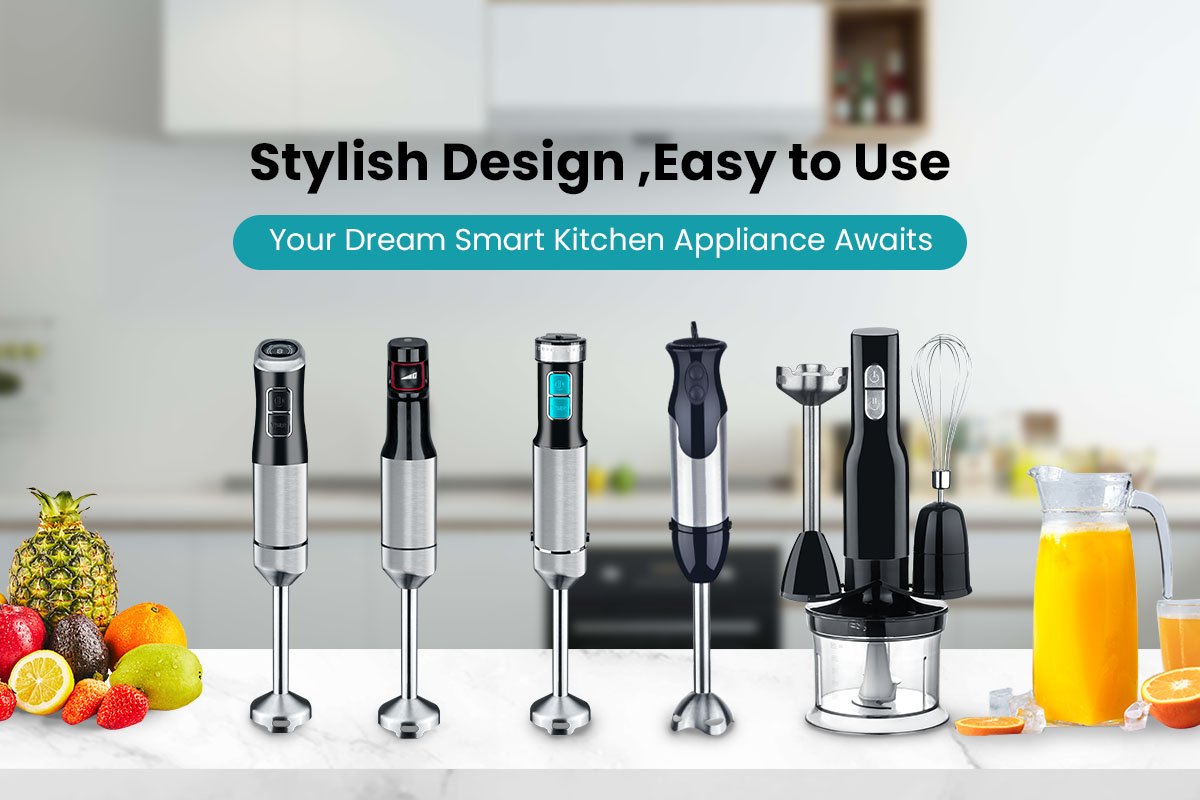
A blender speed control system directly affects the user experience, motor efficiency, and product reliability. Different speed settings allow users to process various ingredients with better control, while a stable control system helps protect the motor during continuous operation.
-
2026-08-04
-
2026-05-26A blender becomes energy efficient when the motor, blade structure, jar design, speed control, and cooling system work together. Higher wattage can provide stronger blending power, but energy efficiency depends on how much useful blending result the appliance delivers during each working cycle.
-
2026-05-21Blender performance is improved by matching motor power, blade structure, jar design, speed control, heat management, and safety testing. A powerful motor alone is not enough. If the blade angle, jar circulation, sealing structure, or cooling design is weak, the blender may still struggle with frozen fruit, ice, nuts, or thick mixtures.
-
2026-05-06The best motor type for blenders depends on the product level, target recipe, jar capacity, speed control, and expected service life. For most household and kitchen appliance programs, a copper-wound universal motor is a practical choice because it can deliver high speed, strong starting power, and compact structure for countertop blenders, hand blenders, and nutrition blenders.
-
2026-02-27Yes, you can make green smoothies with a hand blender, and this is one of the common applications for immersion blenders. However, performance quality depends on motor torque, blade geometry, speed control, and container depth—especially when blending fibrous leafy greens such as spinach, kale, or celery.
-
2026-02-03Yes, a hand blender can be used for making cake, but performance depends on motor capacity, speed control, attachment design, and ingredient type. While hand blenders are primarily designed for pureeing and emulsifying, many modern units—especially those with whisk or beater attachments—can handle light cake batters effectively.