




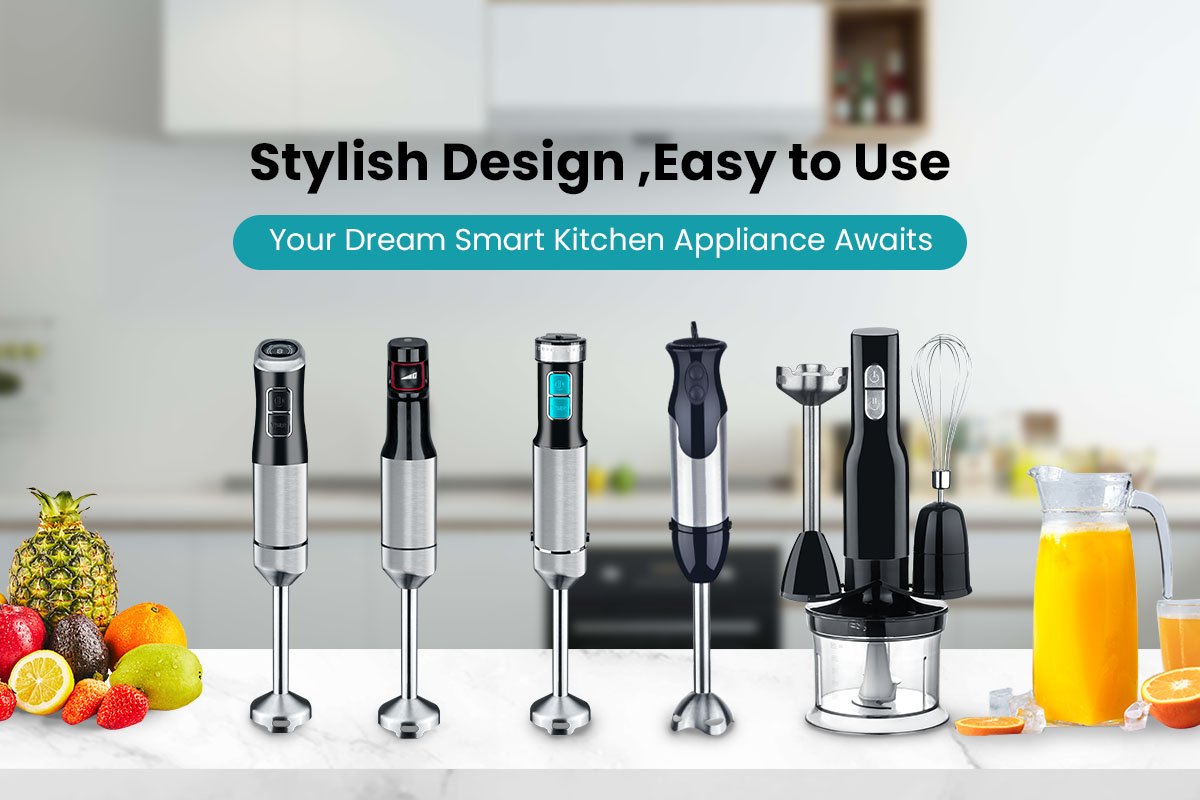
Private label blender sourcing requires more than finding a product supplier. Supermarkets need products that match their market positioning, maintain stable quality, meet safety requirements, and provide reliable supply capacity. Therefore, selecting the right blender manufacturer involves evaluating production capability, OEM experience, quality systems, materials, and export compliance.
-
2026-09-01
-
2026-08-31Choosing the right blender manufacturer requires more than reviewing product samples and prices. A reliable manufacturing partner should have strong production capability, quality management systems, OEM experience, and the ability to support long-term product development.
-
2026-08-28Production capacity is one of the most important factors when evaluating a blender manufacturer. A factory with sufficient capacity can support stable supply, maintain consistent quality, and respond effectively to market demand changes.
-
2026-08-19A successful OEM blender project starts with clear communication between the product developer and the manufacturer. Before production begins, a professional blender manufacturer needs complete project information to evaluate product design, manufacturing feasibility, material requirements, certification needs, and production planning.
-
2026-08-13Choosing the right supply partner is one of the most important decisions when developing blender products. A company that can provide a product catalog is not always the same as a company that can control production quality, support customization, and manage long-term supply.
-
2026-08-12Choosing the right supply source is an important decision when developing blender products. Buying directly from a blender manufacturer provides more than a competitive price. It allows better control over product quality, customization, production efficiency, and long-term supply stability.
-
2026-08-11Selecting the right blender manufacturer in China requires more than checking product catalogs or comparing prices. A reliable factory should have real production capability, quality control systems, engineering experience, and export compliance knowledge.
-
2026-08-10Choosing a reliable blender manufacturer is an important step when developing kitchen appliance products. A suitable manufacturing partner is not only responsible for product supply but also influences product quality, production stability, customization capability, and long-term market performance.
-
2026-07-31Material selection is one of the most important factors affecting blender safety, durability, and product reliability. A blender directly contacts food ingredients during operation, which means every material used in the product structure needs careful evaluation.
-
2026-07-30Choosing the right blender power level is an important decision when developing kitchen appliance products. Different wattage options provide different performance characteristics, energy consumption levels, and application possibilities.
-
2026-07-29Export packaging plays an important role in protecting blender products during transportation, storage, and international distribution. A blender contains multiple precision components, including motors, blades, electrical systems, and plastic structures. Without proper packaging design, products may experience damage, appearance issues, or performance problems during shipping.
-
2026-07-28Planning a blender product line requires a clear understanding of market needs, product positioning, manufacturing capability, and long-term supply strategy. A successful product range should not only match local consumer preferences but also maintain reliable quality, efficient production, and competitive market positioning.