




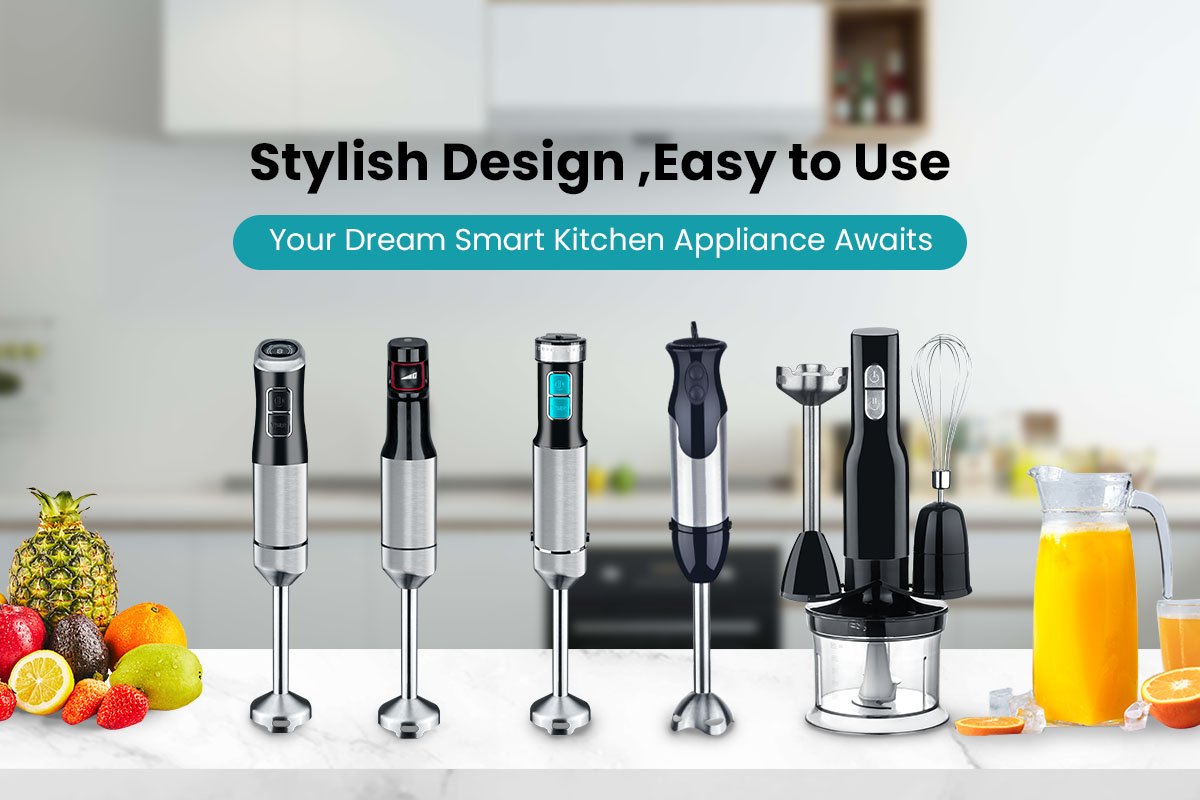
How To Compare 400W, 600W, and 1000W Blender Models
Choosing the right blender power level is an important decision when developing kitchen appliance products. Different wattage options provide different performance characteristics, energy consumption levels, and application possibilities.
For manufacturers, comparing 400W, 600W, and 1000W blender models requires evaluating more than motor power. Product design, blade structure, materials, quality control, and market positioning all influence the final performance.
As a professional kitchen appliance manufacturer, KANGJIA focuses on integrated production, OEM and ODM development, and strict quality management. Our blender products are developed with different specifications to support various market requirements.
Understanding Blender Wattage Differences
Blender wattage indicates the electrical power input of the motor system. Higher wattage generally provides stronger processing capability, but the ideal power level depends on the intended application.
| Blender Power | Main Characteristics | Suitable Applications |
|---|---|---|
| 400W | Basic blending performance | Soft ingredients and daily use |
| 600W | Balanced power and efficiency | General household blending |
| 1000W | Strong processing capability | Heavy-duty blending tasks |
According to the International Energy Agency, improving appliance efficiency and performance balance is an important direction in electrical appliance development. Manufacturers need to consider both power output and overall product efficiency.
How to Choose Between 400W, 600W, and 1000W Models
Different markets may require different blender specifications.
400W Blender Models
400W models are often designed for basic applications where moderate blending performance is sufficient.
Advantages include:
Lower energy consumption
Compact product design
Suitable for simple food preparation
Competitive market positioning
These models are commonly suitable for consumers who need practical daily blending functions.
600W Blender Models
600W models provide a balance between performance and efficiency.
Key features include:
Stronger blending capability
Wider application range
Better handling of different ingredients
Suitable product positioning for general markets
This power level is often selected for products requiring balanced performance.
1000W Blender Models
1000W models provide stronger motor performance for demanding applications.
Advantages include:
Higher processing capability
Better performance with harder ingredients
Suitable for frequent use
Support for multifunctional applications
These models require stronger motor systems, reliable components, and strict quality control.
Manufacturing Process Overview for Different Blender Models
There is an important difference between working with a manufacturer and purchasing through a trader. Manufacturers can directly control motor selection, production processes, and quality standards.
At KANGJIA, blender production includes:
Motor System Development
Different power levels require different motor designs. Manufacturers evaluate:
Power stability
Heat management
Operating durability
Performance consistency
Component Manufacturing
Production control covers:
Plastic components
Metal structures
Blade systems
Electrical parts
Assembly and Testing
Complete blender units are tested for:
Motor operation
Blending performance
Safety requirements
Noise level
Product reliability
Quality Control Checkpoints for Blender Motors
Higher wattage does not automatically mean better product performance. Quality control is essential for every power level.
| Testing Area | Quality Focus |
|---|---|
| Motor testing | Power output and stability |
| Temperature testing | Heat management |
| Blade inspection | Balance and precision |
| Function testing | Complete operation |
| Final inspection | Shipment quality |
KANGJIA applies quality control throughout production to maintain consistent performance across different blender models.
OEM and ODM Process for Blender Power Customization
Different markets may require customized blender specifications based on usage scenarios, product positioning, and local requirements.
A complete OEM and ODM process includes:
Product requirement analysis
Motor specification confirmation
Prototype development
Performance testing
Production approval
Final quality inspection
KANGJIA supports customized blender solutions by combining engineering experience with flexible manufacturing capabilities.
Material Standards Used in Different Blender Models
Motor power needs to work together with suitable materials and structures.
Important considerations include:
Motor Components
Reliable motor components help maintain stable performance at different power levels.
Blade Materials
Strong blade materials improve processing efficiency and durability.
Housing Materials
Suitable housing materials provide protection and structural stability.
Electrical Components
Quality electrical parts support safe operation and compliance.
Bulk Supply Considerations for Blender Projects
For large-volume blender orders, selecting the correct power level should be combined with manufacturing capability and market requirements.
A practical project sourcing checklist includes:
| Evaluation Area | Key Questions |
|---|---|
| Product positioning | Which power level matches the target market? |
| Factory capability | Can different models be produced consistently? |
| Quality system | Are testing procedures established? |
| Customization | Can specifications be adjusted? |
| Export support | Can compliance requirements be met? |
Export Market Compliance
Blender models with different power ratings need to consider safety standards, certification requirements, packaging, and labeling regulations.
KANGJIA supports products designed according to international requirements, including CE, CB, RoHS, and REACH standards. From motor production to final shipment, every stage is managed to support reliable export supply.
Comparing 400W, 600W, and 1000W blender models requires a complete evaluation of power performance, product application, manufacturing capability, and quality control. Through integrated production resources, OEM and ODM experience, and professional testing systems, KANGJIA provides reliable blender solutions for different global markets.