




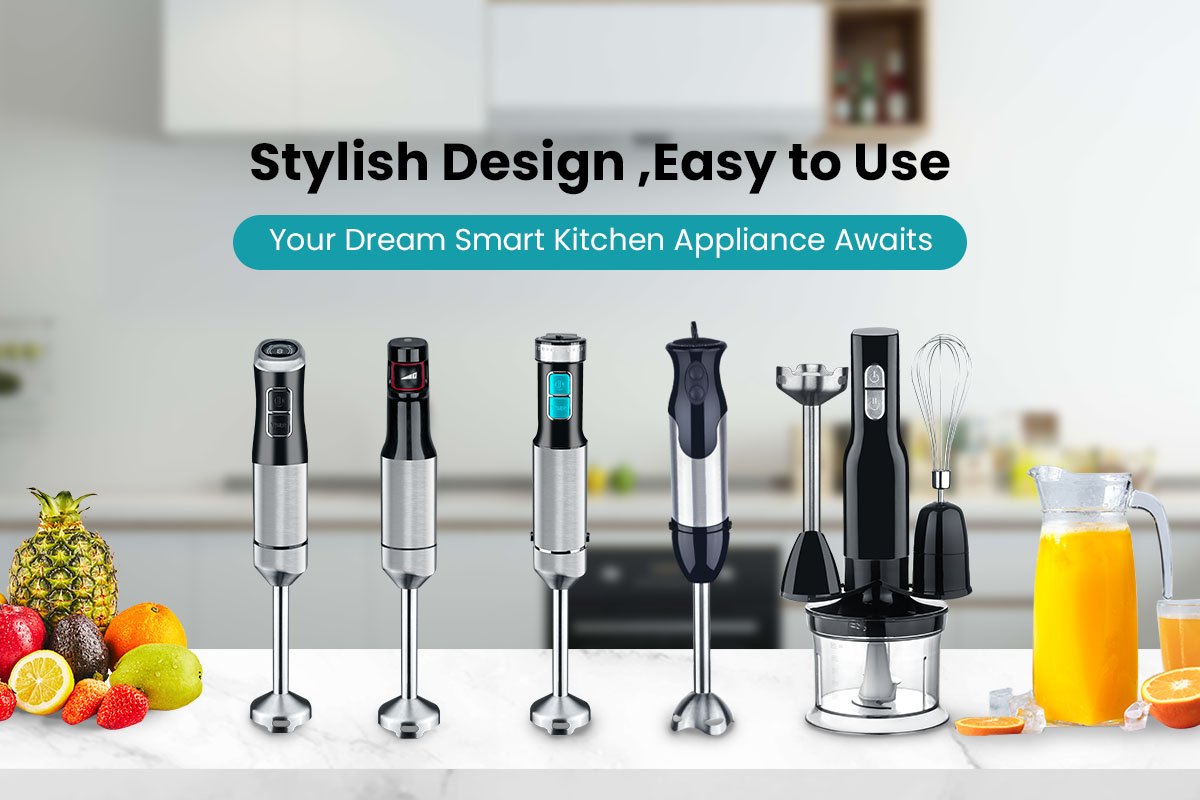
Why Food Grade Materials Matter in Blender Procurement
Material selection is one of the most important factors affecting blender safety, durability, and product reliability. A blender directly contacts food ingredients during operation, which means every material used in the product structure needs careful evaluation.
Food grade materials help ensure safer food preparation, better product performance, and stronger market acceptance. For manufacturers, material control is not only a production requirement but also an important part of quality management and export compliance.
As a professional kitchen appliance manufacturer, KANGJIA focuses on integrated production, OEM and ODM development, and strict quality control. Our blender products are developed with controlled material selection and manufacturing processes to provide reliable solutions for global markets.
Why Food Grade Materials Are Important for Blenders
A blender contains multiple components that may come into contact with food, including containers, blades, seals, and internal structures.
Using suitable materials helps improve:
| Material Benefit | Product Value |
|---|---|
| Food safety | Reduces contamination risks |
| Durability | Improves product lifespan |
| Chemical resistance | Supports repeated use |
| Product quality | Enhances market confidence |
According to the U.S. Food and Drug Administration, materials used in food contact applications should meet specific safety requirements to reduce risks related to chemical migration and contamination.
Key Materials Used in Blender Manufacturing
A professional blender manufacturer evaluates different materials according to their function and application.
Food Contact Components
Parts that directly contact ingredients require suitable food grade materials with good durability and safety performance.
Common considerations include:
Food contact compliance
Chemical stability
Temperature resistance
Long-term durability
Blade Materials
Blades need to provide both strength and corrosion resistance.
Important factors include:
Material hardness
Cutting performance
Corrosion resistance
Structural stability
Housing Materials
The external housing needs to balance appearance, protection, and durability.
Suitable materials help improve:
Impact resistance
Product appearance
Structural protection
Electrical Components
Electrical materials need to support safe operation and meet international requirements.
Manufacturing Process Overview for Material Control
There is an important difference between working with a manufacturer and purchasing through a trader. A manufacturer can directly control material selection, production processes, and quality inspection.
At KANGJIA, material management is integrated into the complete manufacturing process.
The process includes:
Incoming Material Inspection
Before production, materials and components are inspected to verify quality requirements.
Inspection areas include:
Material specifications
Component quality
Structural performance
Production compatibility
Component Processing
Materials are processed according to production standards to maintain consistency.
Product Assembly
During assembly, manufacturers check whether different materials work together properly.
Final Testing
Finished blenders are tested for:
Functional performance
Safety requirements
Product durability
Appearance quality
OEM and ODM Process for Material Selection
Different markets may have different requirements for blender materials. A professional OEM and ODM process helps manufacturers select suitable materials based on product positioning.
The process includes:
Product requirement analysis
Material evaluation
Prototype development
Safety testing
Mass production approval
KANGJIA supports customized kitchen appliance development by combining engineering experience with flexible manufacturing capabilities.
Quality Control Checkpoints for Food Grade Materials
Material quality should be controlled throughout the production process.
| Production Stage | Quality Control Focus |
|---|---|
| Material inspection | Verify material standards |
| Component production | Check processing accuracy |
| Assembly | Confirm structural compatibility |
| Function testing | Evaluate product performance |
| Final inspection | Confirm shipment quality |
A complete quality management system helps maintain consistent product performance.
Bulk Supply Considerations for Blender Projects
For large-volume blender procurement, material quality should be evaluated together with manufacturing capability.
A practical project sourcing checklist includes:
| Evaluation Area | Key Questions |
|---|---|
| Material standards | Are food contact requirements considered? |
| Factory capability | Can quality remain stable in bulk production? |
| Testing system | Are material and product tests available? |
| Documentation | Can compliance information be provided? |
| Production control | Are inspection procedures established? |
Reliable material management helps reduce product risks during large-scale supply.
Export Market Compliance
Different countries and regions have specific requirements for food contact materials and kitchen appliances. Manufacturers need to consider safety standards, testing procedures, labeling, and certification requirements.
KANGJIA supports products designed according to international requirements, including CE, CB, RoHS, and REACH standards. From material selection to final shipment, every stage is managed to support reliable export supply.
Food grade materials are a key factor in blender quality, safety, and long-term performance. Through controlled material selection, professional manufacturing processes, and OEM and ODM capabilities, KANGJIA provides reliable blender solutions designed for global markets.