




What Information Do Buyers Need To Provide For OEM Blender Projects
A successful OEM blender project starts with clear communication between the product developer and the manufacturer. Before production begins, a professional blender manufacturer needs complete project information to evaluate product design, manufacturing feasibility, material requirements, certification needs, and production planning.
Providing accurate information at the beginning can reduce unnecessary design changes, shorten development cycles, and improve production efficiency. At KANGJIA, we focus on small home appliance manufacturing with integrated capabilities including product development, injection molding, hardware processing, motor production, assembly, and testing. This allows us to support customized blender projects from concept evaluation to mass production. (KANGJIA)
Manufacturer vs Trader: Why Project Information Matters
The information required for an OEM project is closely related to whether you work with a direct manufacturer or a trading company.
A trading company usually focuses on product communication and order coordination, while a direct kitchen appliance manufacturer needs technical details to manage:
Product development
Component selection
Production processes
Quality control
Certification preparation
A blender is not a single component product. It combines multiple systems, including the motor, circuit board, blade assembly, container, housing structure, and control system. Without clear project information, manufacturers cannot accurately evaluate production requirements.
A professional factory needs to understand not only what product is required but also how the product will be positioned, customized, tested, and sold.
Manufacturing Process Overview: Information Needed Before Production
Before starting an OEM blender project, manufacturers usually collect information from several key areas.
| Project Information | Why It Matters |
|---|---|
| Product Type | Determines design direction and production method |
| Product Function | Defines motor power and structure requirements |
| Market Target | Influences certification and compliance needs |
| Quantity Requirement | Helps plan materials and production capacity |
| Customization Level | Determines development workload |
| Packaging Requirements | Affects final production preparation |
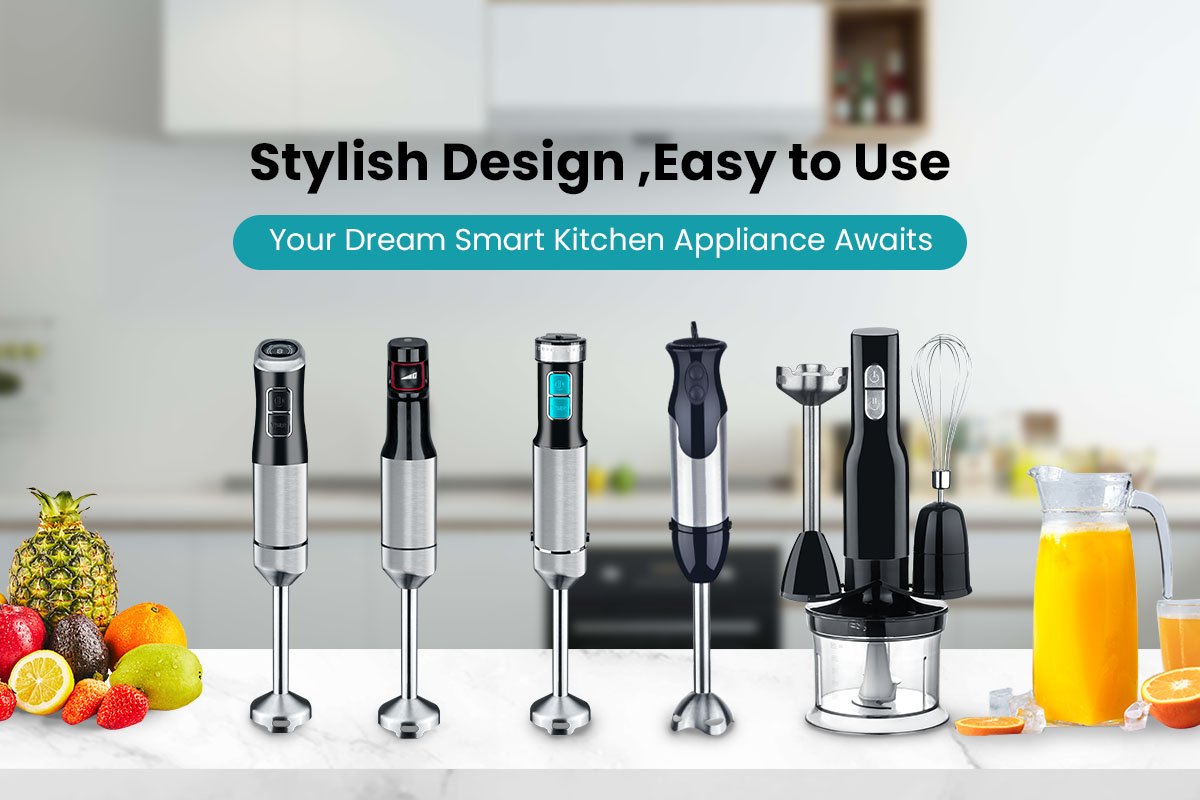
For example, KANGJIA provides different blender categories, including Hand Blenders, Table Blenders, Nutrition Blenders, and Food Processors. Different product categories require different structures, power systems, and manufacturing processes. (KANGJIA)
Product Specification Information Required For OEM Blender Development
The first step in an OEM project is defining product specifications.
Manufacturers usually need information such as:
Product Category
The manufacturer needs to know whether the project involves:
Hand blender
Table blender
Personal blender
Food processor
Multifunction blender
Different products require different production processes and component configurations.
Motor Requirements
Motor specifications directly influence blender performance.
Important information includes:
Power requirement
Voltage standard
Speed settings
Continuous working time
Noise requirements
For example, KANGJIA electric blender models include different power configurations, such as 300W to 500W options, multiple speed controls, and different jar capacities depending on application needs. (KANGJIA)
Product Structure Requirements
Manufacturers also need to understand:
Container material
Blade design
Control method
Accessories
Safety functions
Clear structural requirements help engineers evaluate production feasibility before sampling.
OEM And ODM Process: Design Information Manufacturers Need
A complete OEM blender manufacturer requires more than product specifications. For customized projects, design information is also important.
Appearance Design
Manufacturers may need:
Product drawings
3D files
Reference images
Color requirements
Logo placement
These details help evaluate tooling requirements and production methods.
Functional Requirements
The manufacturer should understand:
Required functions
Target user application
Performance expectations
Additional accessories
For example, a blender designed for home kitchens may focus on compact structure and convenience, while a commercial application may require stronger motors and longer operating time.
Packaging Requirements
Packaging information should include:
Box design
Printing requirements
Label information
Instruction manuals
Shipping requirements
Early packaging confirmation helps avoid delays before shipment.
Quality Control Checkpoints Based On Project Requirements
A reliable blender supplier needs project information to establish proper quality standards.
Quality control planning usually includes:
Material Inspection
Manufacturers need to confirm:
Plastic material standards
Food-contact requirements
Stainless steel specifications
Electronic component standards
Production Inspection
During manufacturing, factories monitor:
Assembly accuracy
Electrical connections
Motor performance
Product appearance
Final Testing
Finished products are tested for:
Operating performance
Speed control
Safety functions
Continuous working stability
According to IEC 60335 safety standards for household electrical appliances, manufacturers need to evaluate electrical safety and reliability before products enter international markets.
Material Standards Used In OEM Blender Projects
Material selection should be confirmed before production because it affects product performance and certification.
Common material information includes:
| Component | Information Required |
|---|---|
| Blade | Material type and structure |
| Container | Food-contact requirements |
| Housing | Plastic material and appearance |
| Motor System | Performance and durability requirements |
| Accessories | Material and function standards |
For example, KANGJIA blender products use stainless steel blade structures and different container configurations according to product requirements, including glass and plastic jar options. (KANGJIA)
Bulk Supply Considerations: Production Planning Information
For large-volume OEM orders, manufacturers need additional supply information.
Important details include:
Expected order quantity
Delivery schedule
Annual purchasing plan
Packaging quantity
Shipping requirements
A reliable bulk blender supplier uses this information to arrange:
Material purchasing
Production scheduling
Quality inspection plans
Warehouse preparation
Early planning helps manufacturers maintain stable production capacity and avoid delays caused by unexpected demand changes.
Project Sourcing Checklist Before Starting OEM Production
Before confirming an OEM blender project, manufacturers usually recommend preparing the following information:
| Checklist Item | Key Information |
|---|---|
| Product Category | Blender type and application |
| Technical Specification | Power, voltage, functions |
| Design File | Drawings, images, 3D files |
| Materials | Required standards and specifications |
| Quantity | Initial order and future demand |
| Certification | Target market requirements |
| Packaging | Design and labeling details |
A complete checklist allows engineers to provide more accurate solutions and production recommendations.
Export Market Compliance Information
Export requirements should be considered at the beginning of product development.
Manufacturers need to know:
Target sales market
Required certifications
Electrical standards
Food-contact requirements
Packaging regulations
KANGJIA products have passed certifications including GS, CE, CB, LFGB, RoHS, and REACH, supporting different international market requirements. (KANGJIA)
Building Efficient OEM Blender Projects Through Better Communication
A successful OEM blender project depends on accurate information exchange before production starts. Clear specifications, design requirements, material standards, certification needs, and supply plans help manufacturers create better production solutions.
As an experienced blender manufacturer, KANGJIA combines integrated production capabilities with OEM and ODM development experience. Through professional engineering support, manufacturing control, and quality management, KANGJIA provides reliable kitchen appliance solutions for global markets. (KANGJIA)