




Table Blender vs Hand Blender: Which Product Has Better Wholesale Opportunities?
Hand Blender offers broader wholesale opportunities through compact design and flexible applications, while Table Blender provides stronger value for customers requiring higher capacity and stable blending performance.
What Is the Difference Between Table Blender and hand blender?
For kitchen appliance wholesalers and importers, the main difference between Table Blender and hand blender is the product structure, application scenarios, consumer demand, storage requirements, and market positioning.
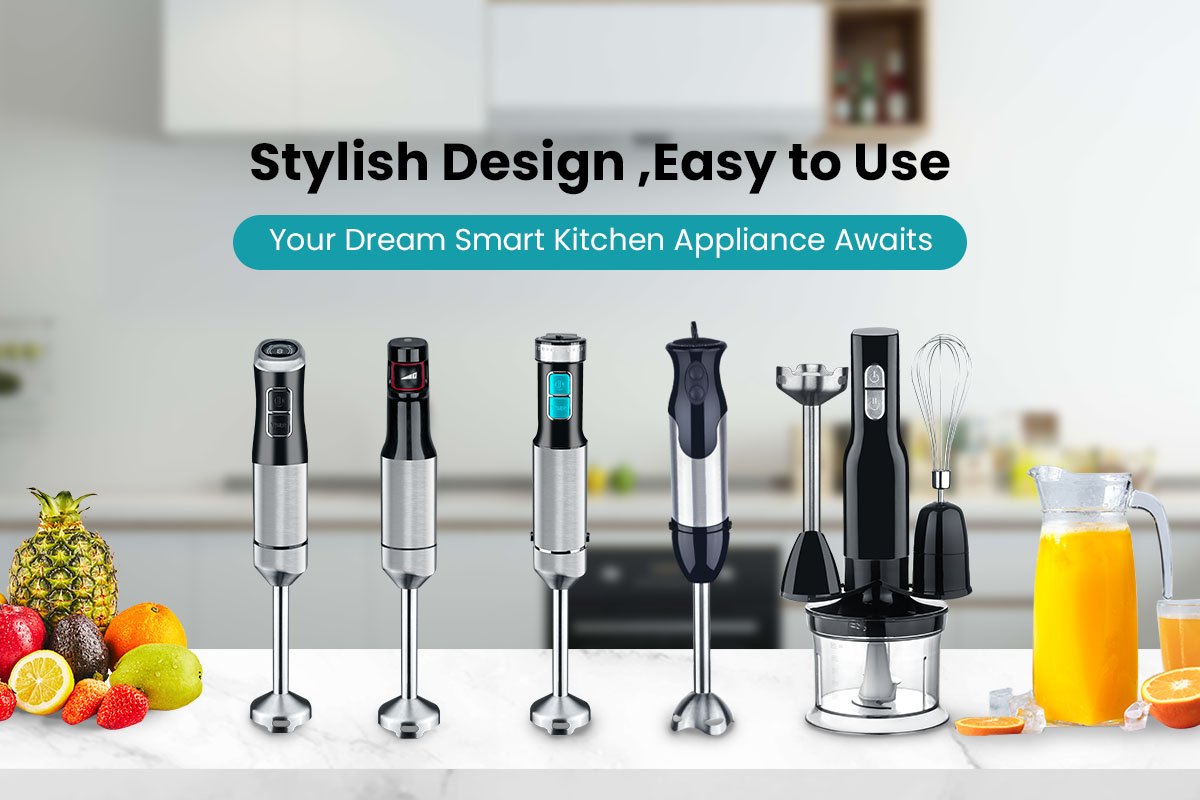
A Hand Blender is a handheld appliance designed for flexible kitchen use. Users can blend ingredients directly in different containers, making it suitable for various cooking tasks.
A Table Blender uses a motor base and blending jar system. It focuses on higher-capacity blending, stronger visual presentation, and dedicated countertop use.
From a wholesale perspective, selecting the right product depends on target customers, retail channels, logistics requirements, and market strategy.
| Comparison | Hand Blender | Table Blender |
|---|---|---|
| Product Structure | Handheld motor + shaft | Base motor + jar |
| Main Advantage | Flexibility and convenience | Capacity and performance |
| Storage Requirement | Lower | Higher |
| Target Users | General households | Families and heavy users |
| Wholesale Positioning | Broad consumer market | Performance-focused market |
Why Do Wholesalers Choose Hand Blender Products?
Hand Blender products provide strong wholesale potential because of their compact structure and wide application range.
Main advantages include:
Smaller product size
Easier storage
Lower shipping volume
Flexible applications
Suitable for different customer groups
Common applications include:
Soup preparation
Sauce mixing
Baby food preparation
Ingredient blending
For wholesalers, compact products can reduce inventory pressure and provide more flexible distribution options.
Common wholesale channels include:
Online sellers
Kitchenware distributors
Household appliance retailers
General consumer markets
Why Do Wholesalers Choose Table Blender Products?
Table Blender products attract customers who need larger capacity and stronger blending performance.
Main advantages include:
Larger processing capacity
Stable countertop operation
Stronger product appearance
Higher performance perception
Common applications include:
Smoothie preparation
Beverage production
Family food processing
Daily kitchen blending
For wholesalers targeting household appliance markets, Table Blender provides a familiar and widely accepted product category.
Which Product Has Wider Wholesale Market Coverage?
Wholesale potential depends on customer groups and sales channels.
Hand Blender Wholesale Advantages:
Suitable for:
Small households
Individual users
Convenience-focused customers
Compact kitchen markets
Key selling points:
Easy storage
Flexible usage
Multi-purpose operation
Table Blender Wholesale Advantages:
Suitable for:
Families
Heavy kitchen users
Customers needing larger capacity
Performance-focused markets
Key selling points:
Strong blending capability
Larger output
Better countertop presence
Which Product Provides Better OEM Opportunities?
Both products support OEM development with different customization directions.
Hand Blender OEM Options:
Common customization includes:
Motor specifications
Shaft materials
Speed control
Accessory combinations
Product colors
Packaging design
The focus is creating flexible and practical kitchen solutions.
Table Blender OEM Options:
Common customization includes:
Jar capacity
Blade structure
Motor performance
Control interface
Product appearance
The focus is developing performance-oriented countertop appliances.
How Does Product Size Affect Wholesale Business?
Product size directly influences inventory, storage, and logistics.
Hand Blender Advantages:
Smaller cartons
Lower transportation cost
Easier warehouse management
Flexible inventory planning
These advantages are valuable for wholesalers managing multiple products.
Table Blender Considerations:
Larger packaging
More storage requirements
Higher shipping volume
Additional protection needed
However, larger products may create stronger retail display value.
Which Product Provides Better Cost Efficiency for Bulk Orders?
Cost efficiency depends on product structure and business requirements.
Hand Blender Cost Advantages:
Lower material usage
Smaller packaging
Efficient transportation
Easier bulk storage
Table Blender Cost Considerations:
Larger components
Higher packaging requirements
Increased logistics cost
For wholesalers, total cost should include production, shipping, storage, and market value.
Which Product Fits Different Wholesale Customers?
Different buyers may prefer different blender categories.
Hand Blender Fits:
Kitchenware wholesalers
Online retailers
Household product distributors
General appliance sellers
Customer demand usually focuses on:
Convenience
Compact design
Flexible usage
Table Blender Fits:
Appliance distributors
Supermarkets
Premium kitchen retailers
Family appliance suppliers
Customer demand usually focuses on:
Capacity
Performance
Household applications
Which Product Has Better Market Differentiation?
Product differentiation affects wholesale competitiveness.
Hand Blender Differentiation Opportunities:
Brands can focus on:
Compact design
Accessory combinations
Multi-function features
Convenient operation
Table Blender Differentiation Opportunities:
Brands can focus on:
Motor performance
Capacity options
Advanced controls
Premium appearance
The right differentiation strategy depends on customer expectations and target markets.
Which Product Is Better for New Wholesale Buyers?
New buyers often need to balance investment, market demand, and product flexibility.
Hand Blender Advantages:
Lower inventory pressure
Easier product introduction
Wider application scenarios
Flexible market testing
Table Blender Advantages:
Strong product visibility
Higher perceived performance
Suitable for complete kitchen categories
The suitable product depends on the buyer's market positioning and sales channels.
How Should Wholesalers Choose Between Table Blender and Hand Blender?
Wholesalers can evaluate:
Choose Hand Blender When:
Compact products are preferred
Storage efficiency is important
Broad customer coverage is needed
Flexible applications are valuable
Choose Table Blender When:
Larger capacity is required
Performance is the key selling point
Family markets are targeted
Countertop appliances are important
The right choice depends on customer demand, retail channels, inventory capability, and wholesale strategy.
How Can a Blender Manufacturer Support Wholesale Buyers?
A professional blender manufacturer can support wholesalers through:
Product selection guidance
OEM customization
Bulk production
Quality inspection
Packaging solutions
Export support
Supply planning
Manufacturers with experience in different blender categories can help wholesalers choose products suitable for their target markets.
Conclusion: Table Blender or Hand Blender, Which Has Better Wholesale Opportunities?
Hand Blender provides strong wholesale opportunities through compact design, flexible applications, and easier logistics. Table Blender provides opportunities in markets where customers require larger capacity and stronger blending performance.
For kitchen appliance wholesalers, the ideal product choice depends on customer groups, sales channels, inventory capability, and long-term market strategy.